
Cross-posted with permission from Forbes.
Rajiv Vinnakota , President
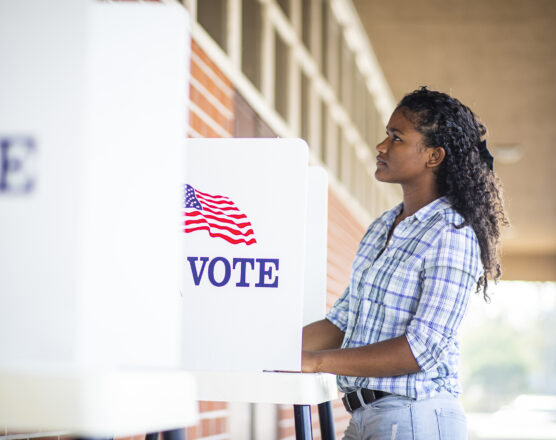
It’s election season, which means colleges, schools, and community organizations across the country are gearing up to get out the youth vote. For more than fifty years, since the 26th Amendment lowered the voting age to 18, driving turnout among young people has been considered a key measure of American civic health.
“Too many of them don’t vote,” Ronald Reagan said of young Americans in a 1986 radio address, urging them to claim their role in the political decisions that would shape their lives. “They’re too important for you to give up any part of your role in making them.”
Barack Obama, pushing for the youth vote three decades later, was even more direct. “You wouldn’t let your grandparents pick your playlist,” he said in a video message aimed at the young. “Why would you let them pick your representative who’s going to determine your future?”
Obviously, voting matters. And research on Gen Z civic attitudes conducted by C&S finds that voting remains a top way for young people to get involved in public life.
But at a time of historic disaffection with American politics, when many Americans of all ages report deep distrust in both major political parties and in national governing institutions, voting cannot be the sole or supreme way that we invite young people into civic life.
Fully nine in ten young Americans report caring about their community and wanting to be involved, and that includes a sizable portion of young people who did not vote in the last election and won’t vote in this one. They need on-ramps to civic life that do not begin or end with the ballot box.
That’s what C&S has tried to build: opportunities for young Americans to get involved that don’t embroil them in the political strife that turns them off. Our research finds that young people are less drawn to debating online or working in government — but they do want to discuss issues in person, learn how government works and volunteer in their own communities.
Across all our work, C&S helps young people practice three essential civic skills: having productive conversations; using credible information; and collaborating to create solutions. These skills matter far beyond the classroom. On the campuses where we focus our work, they show up in campuswide events, co-curricular activities, academic courses, and residential life.
Those are areas where schools, universities, and community groups can excel, creating lower-stakes, lower-stress ways of building civic capacity without requiring an interest in politicking. From talking through a hard question with classmates to working on a shared service project, young people are often hungry for ways to get involved that don’t require picking a side, adopting a partisan lens, or re-posting a viral video.
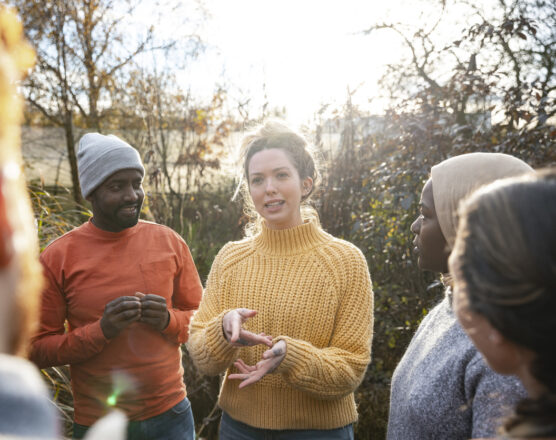
Opportunities like these are already taking shape across the country. At Manhattanville University, the required first-year seminar that reaches every incoming student now includes activities focused on listening, dialogue across differences, critical thinking, and collaborative problem-solving. As dusk falls at Claremont McKenna College, students gather around firepits near their dormitories, s’mores in hand, to talk about challenging topics selected by student facilitators. And the SUNY system now has a Civic Discourse general education requirement for undergraduates, who must demonstrate the ability to practice constructive dissent, seek new information, and assess multiple viewpoints.
These skills also grow when students take on real projects in their communities. At Smith College in Northampton, Massachusetts, a student-run STEAM team learned to use robotics kits and then offered more than ten programs at regional schools, reaching more than 200 local participants in a single academic year. At Warren Wilson College in Swannanoa, North Carolina, students on the College’s Construction Crew completed a fully functional tiny home for a family displaced by Hurricane Helene — a solar-powered, high-efficiency structure built in partnership with BeLoved Asheville, a nonprofit focused on housing justice in the region. Students led every aspect of the project, from design and fundraising to construction and community outreach, drawing support from dozens of local businesses and tradespeople.
To be clear, voting should remain a cherished, fundamental right. And students don’t choose to vote in a vacuum. In many cases, the choice to vote started long before Election Day as students talked about politics with their classmates, studied up on the functions of local and state government, and joined a student organization devoted to a cause. College is often where the habit of voting begins to take root.
But those starting points tend to reach the students already inclined to look for them. If we want more than 47% of young people casting a ballot — the share in 2024 — we will need a lot more starting points for politically disinclined young people to find their voice and discover their capacity to contribute.
Being turned off by the state of national politics shouldn’t mean being turned away from all forms of civic participation. Get out the vote, yes. But also get out and talk to neighbors, get out and work on a shared project, get out and discover all the ways to strengthen America’s civic fabric before and after the second Tuesday in November.
Sure, Presidents Reagan and Obama promoted the youth vote. But they also did more than that. President Reagan’s administration recruited young adults, including college students, to give 10 hours a month to their communities through Young Volunteers in Action. President Obama signed a law to expand AmeriCorps, a national service program whose members are largely young adults, and launched The President’s Interfaith and Community Service Campus Challenge, where students from different religious and non-religious backgrounds were encouraged to collaborate on tackling community challenges.
They understood, and so should we, that while voting is an essential way to show up for your country, it’s not the only one. This election season, let’s cast a wider net and give young people more ways in. Democracy doesn’t run on ballots alone, and neither should our efforts to bring young people into it.